7 Ways to Enjoy Salmon Sushi, From Nigiri to Mentai
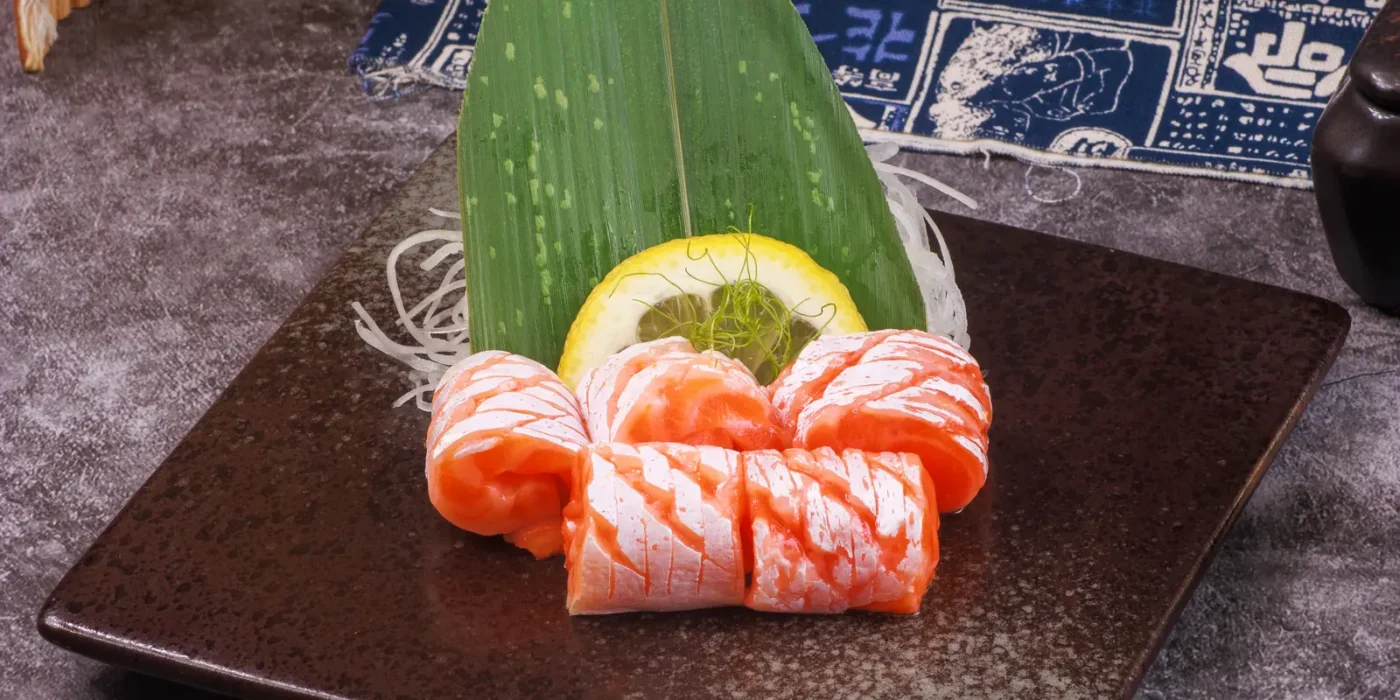
Salmon sushi is the plate almost everybody lifts first, and for good reason — rich, soft, forgiving, and about the gentlest possible introduction for anyone nervous about raw fish.
But stopping at the plain version is a bit like only ever eating one flavour of ice cream. Here are seven variations, all of which pass our belt on an ordinary day, and one more that is not sushi at all.
1. Classic nigiri
A slice draped over hand-pressed rice, and nothing else. This is the benchmark: if the fish is good and the rice is at the right temperature you can tell within one mouthful, because there is nowhere for either of them to hide.
Eat it fish-side down on the tongue and go easy on the soy. A chef has already put a trace of wasabi between the slice and the rice.
2. Aburi, lightly torched
The same slice, seared with a flame for a few seconds. The fat on the surface melts, the edges catch, and the whole thing turns warm and faintly smoky.
This is the one that changes minds. People who are certain they dislike raw fish very often turn out to like aburi, because the torch does just enough to move it into familiar territory.
3. Mentai
Torched and topped with cod roe mayonnaise, which browns under the flame into something savoury and slightly sweet. On a busy evening it rarely makes it more than halfway round the belt before somebody lifts it.
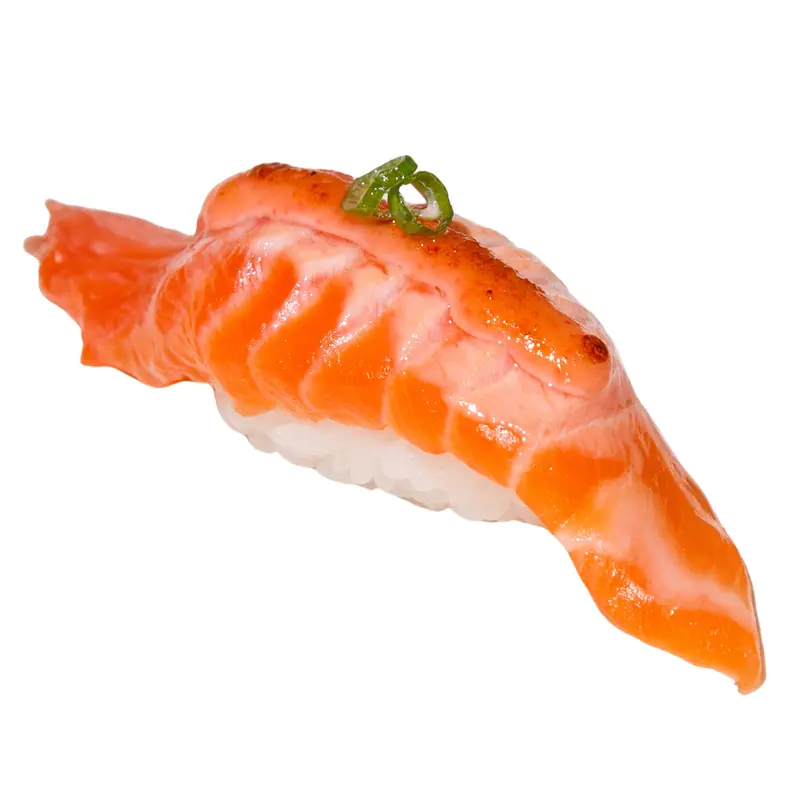
4. Karamiso
Spicy miso over the top. More heat than the mentai and much less sweetness, with the miso bringing a salty depth that cuts straight through the richness of the fish. Worth going for if you find the plain version a little too soft and mild.
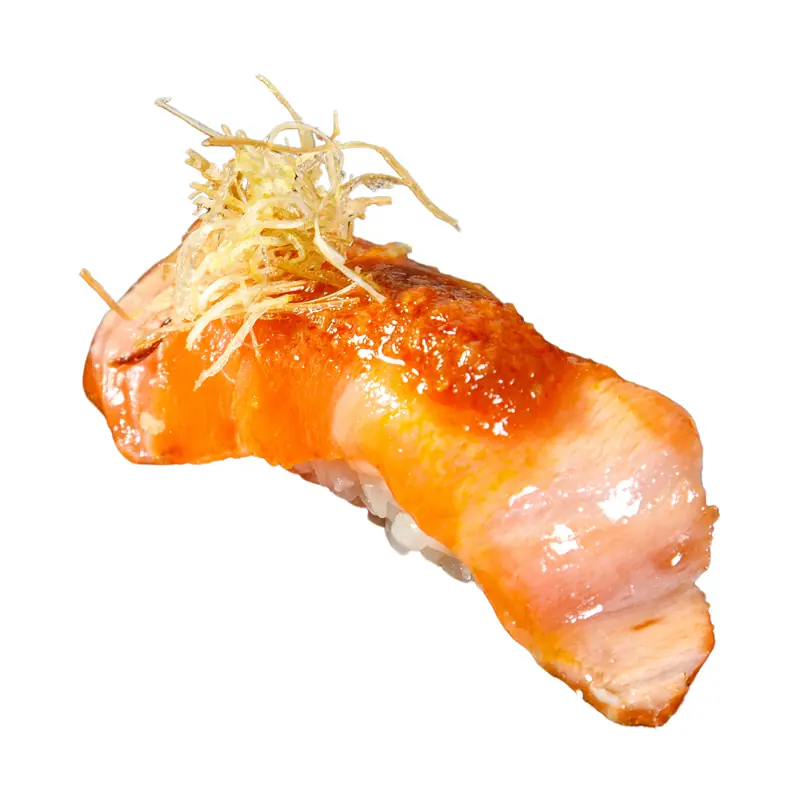
5. Truffle
Truffle gets overused almost everywhere, but it earns its place here — earthy against the oil of the fish, which is a pairing that works rather than a pairing that merely sounds expensive. One plate is plenty, which is the right way to eat it in any case.
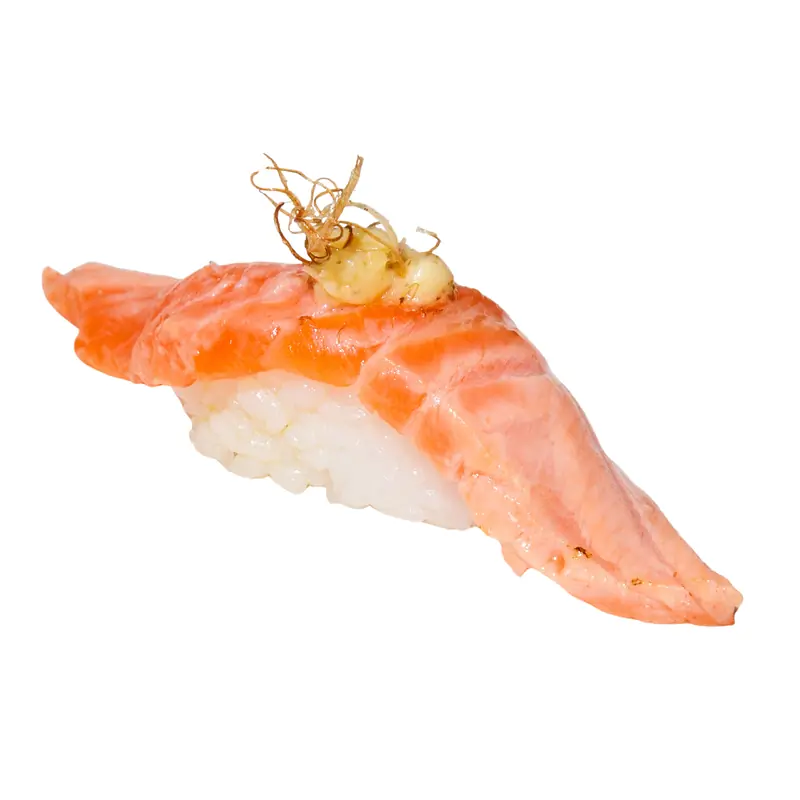
6. Harasu, the belly cut
Harasu is the fatty belly, the part a chef would quietly keep for themselves. It is softer and considerably richer than the loin, and it is usually torched to render some of that fat before it reaches the rice.
If there is one plate on this list worth going out of your way for, it is this one. It is also the one most likely to be gone by 8pm.
7. Ikura, the roe
Not the fish itself but its roe — orange beads that pop between your teeth with a brief wash of salt water. It comes as gunkan, rice collared in seaweed so the beads have somewhere to sit, or piled into a taco temaki alongside the fish, which is the version we would steer you towards first.
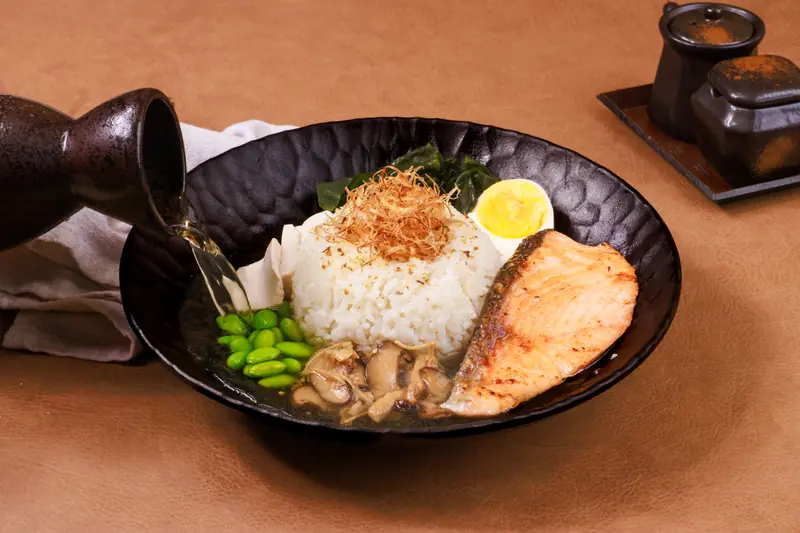
When you would rather have it warm
There is also a version that is not sushi at all. Ochazuke is rice in a fragrant tea broth with salmon on top, poured at the table and eaten hot — the thing to order on an evening when cold plates do not appeal but you still want the same fish.
How to tell whether it is fresh
Colour comes first. Good salmon sushi is bright and even, not grey at the edges or dull through the middle. Then the surface: a fresh slice looks slightly wet and holds its shape, while an old one looks dry and slumps over the rice.
On a belt, though, the most useful test is movement. If plates are being lifted constantly, what passes you was cut in the last few minutes. A full belt in an empty room is telling you something, and it is not good news.
The order to eat them in
Plain first, torched afterwards. Going the other way round, the smoke and the mayonnaise flatten the delicate one and you will not taste what you paid for.
The same logic applies to wasabi and soy. Try the first plate with nothing on it at all, then decide. Dipping rice-side down means the rice drinks the soy and collapses on the way to your mouth, which is a small tragedy that happens at every table in the country.
Ordering for a table
If you are feeding a group, do not send everybody hunting on the belt at once. Pick two or three variations between you — a plain one, a torched one, and something with a sauce on it — and pass them round so that everybody tastes the difference side by side.
It costs no more than eating separately and it turns dinner into something closer to an experiment, which children in particular find far more interesting than being handed a plate.
What to drink with it
Green tea, which is there to clear your palate between plates rather than to match a flavour. Cold water does exactly the same job. A sweet drink works against the fish, which is why the people who eat here most often tend to drink the plainest things on the list.
Ginger is for between plates as well, not on top of them. It is a reset button rather than a topping.
If you have never had it at all
Start with the torched one rather than the plain one, which is the opposite of the advice above and is deliberate. Aburi reads as cooked to most people on a first try, and once that plate has gone down without incident the plain version stops feeling like a leap.
Failing that, order a roll instead of a single piece. There is rice, seaweed, sauce and usually something fried in there too, so no single element has to carry the whole experience on its own.
What it costs and where it comes from
Most of these ride the belt on blue plates at RM3.30, and the richer cuts come round on black at RM5.50. You do not need to order anything or ask for a folder — lift what passes, stack your empties, and let the colours do the arithmetic for you.
Our food is prepared in a central kitchen that has been JAKIM halal certified to MS 1500 since May 2026, and our USJ Taipan restaurant has held its own certificate since 6 November 2026. The other restaurants are not yet certified, and we would rather say so than let anyone assume.
See the full fish selection or find your nearest restaurant.