What Is on a Sushi Menu? A Section-by-Section Guide
Open the folder at a conveyor-belt restaurant for the first time and it can feel like rather a lot. There is the belt, and then there is everything the kitchen makes to order, and the two work in completely different ways.
This is a walk through the sections, so that you know where to look for what you actually want rather than reading the whole thing from the beginning like a novel.
The belt: small plates, colour-coded
The belt carries ready-made plates that you simply lift as they pass. Pink is RM2.20, blue is RM3.30 and black is RM5.50, so the colour tells you the price without your having to check anything at all.
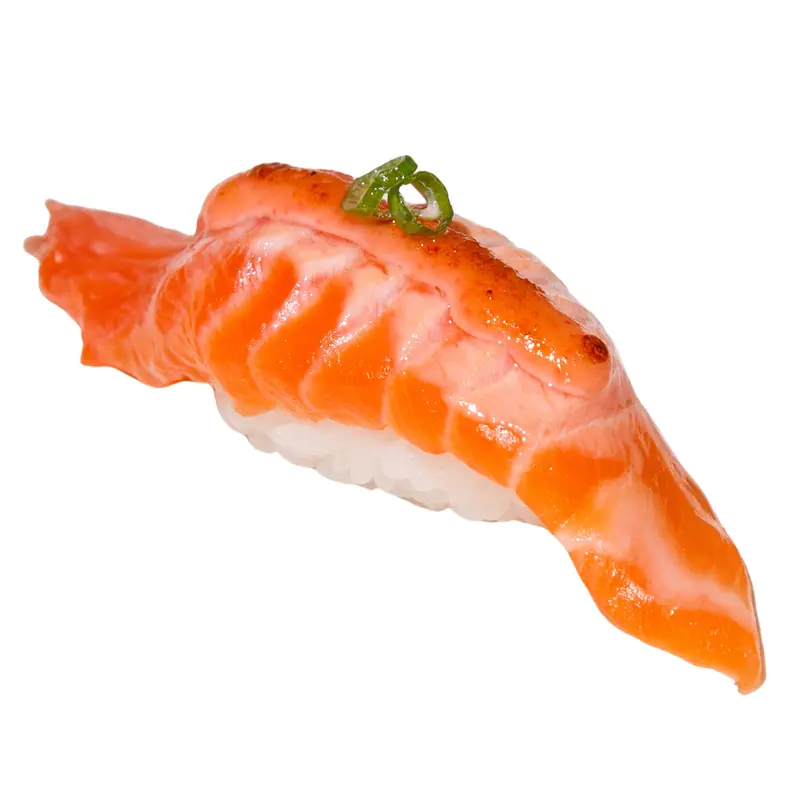
Expect tamago, inari, corn mayo gunkan and edamame on pink; salmon, torched salmon mentai, unagi and smoked duck on blue; tiger prawn, torched Aussie beef and salmon roe on black. You do not need the folder at all to eat well this way, which is rather the point of the format.
Makimono: rolls
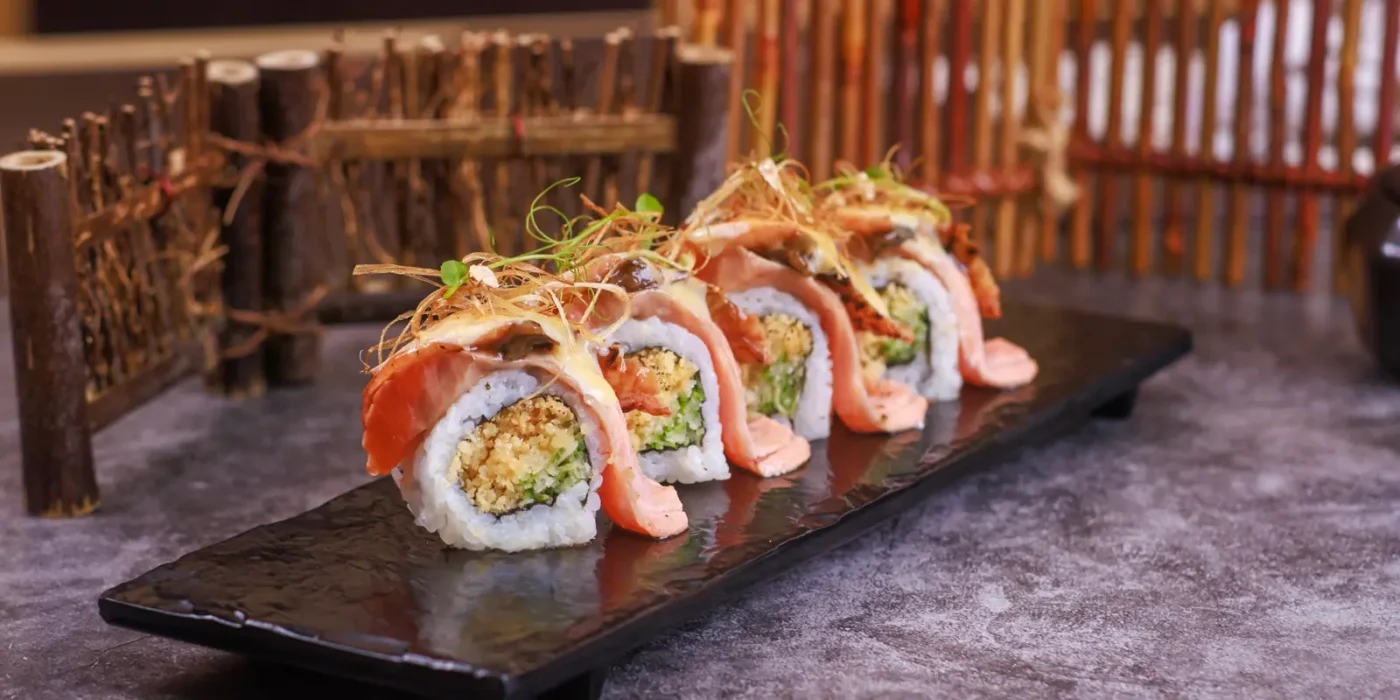
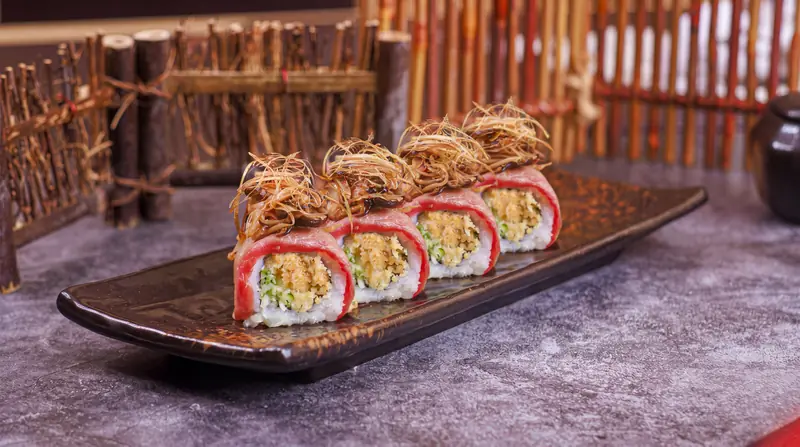
Rolls are where a kitchen shows its personality, because there is no hiding behind a good piece of fish. Ours run from the plain to the loud — Hiro Aburi Shiok Maki with torched eel, Truffle Gyu Maki with Aussie beef, Ryujin Unagi Maki, Dragon Maki, Volcano Spider Maki.
If you are ordering for a table to share, this is the section to spend your money in. A roll arrives cut into rounds, which travels around a table better than anything else on the list.
Temaki and taco temaki: hand rolls
A temaki is a cone of seaweed filled with rice and a topping, eaten with your hands straight away before the seaweed softens. Order it when you are ready to eat it, not at the start with everything else.
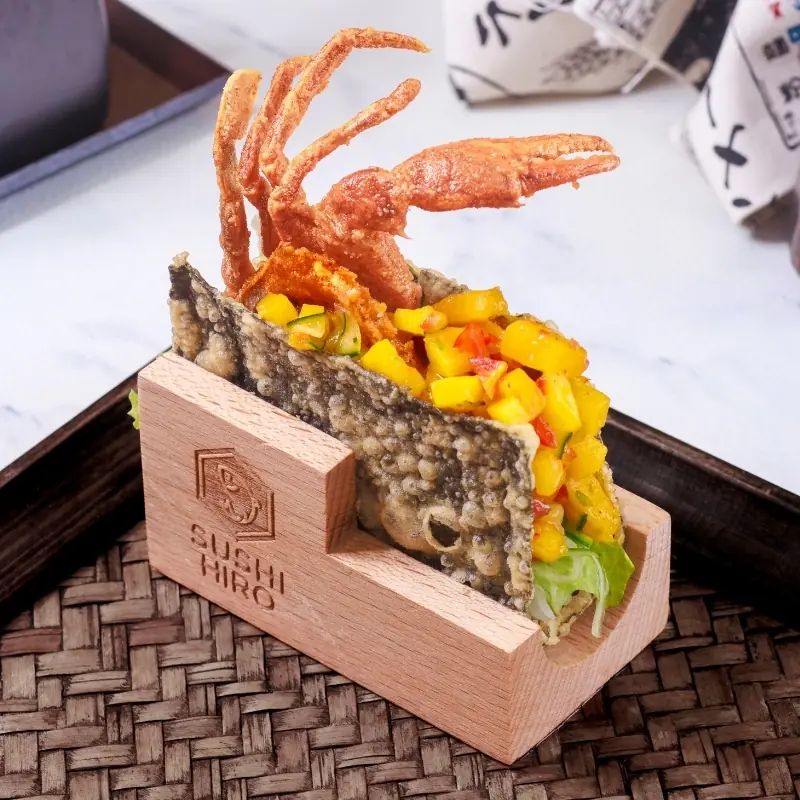
Our taco temaki swaps the seaweed for a crisp shell, which holds up considerably longer. The soft shell crab with spicy mango salsa is the one people photograph before they eat it.
Donburi: rice bowls
A donburi is a bowl of rice with something generous on top, and this is the section to head for when somebody at the table wants a proper meal rather than a sequence of small plates.
Bara chirashi with a scatter of different cuts, tekka don with tuna, unagi don with glazed eel, salmon oyako don with both the fish and its roe. Ochazuke sits here too — rice in a fragrant tea broth rather than a dry bowl, poured at the table and eaten hot.
Menrui and ramen: noodles
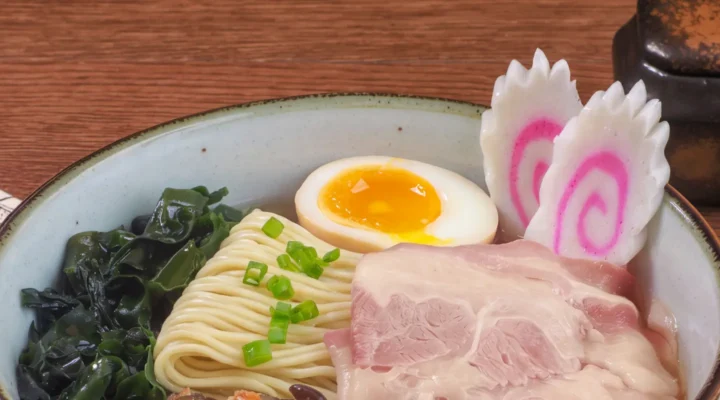
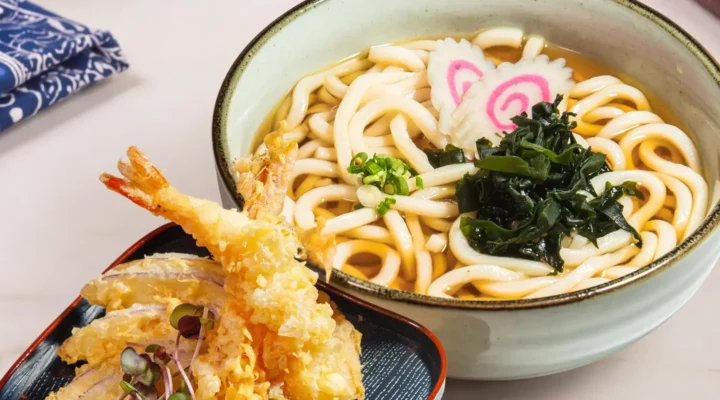
Ramen, udon and soba. Useful on a wet evening, useful for anybody who does not eat raw fish, and useful for children who want something that looks familiar to them.
The ramen is built on long-cooked broth, which is the part that takes the work — gyuzan with Aussie beef, tora ebi with prawn, hotate with scallop, asari with clams. Tempura udon in dashi broth is the one we sell most of, and it is one of the better cheap lunches in this kitchen.
Nabemono: hotpots
Hotpots for sharing, brought to the table bubbling. In a tropical climate this section gets quietly overlooked, which is a shame — a vegetable nabemono between two people on a slow evening is a genuinely good meal, and it is the only thing here that cannot be rushed.
Agemono and zensai: fried things and starters
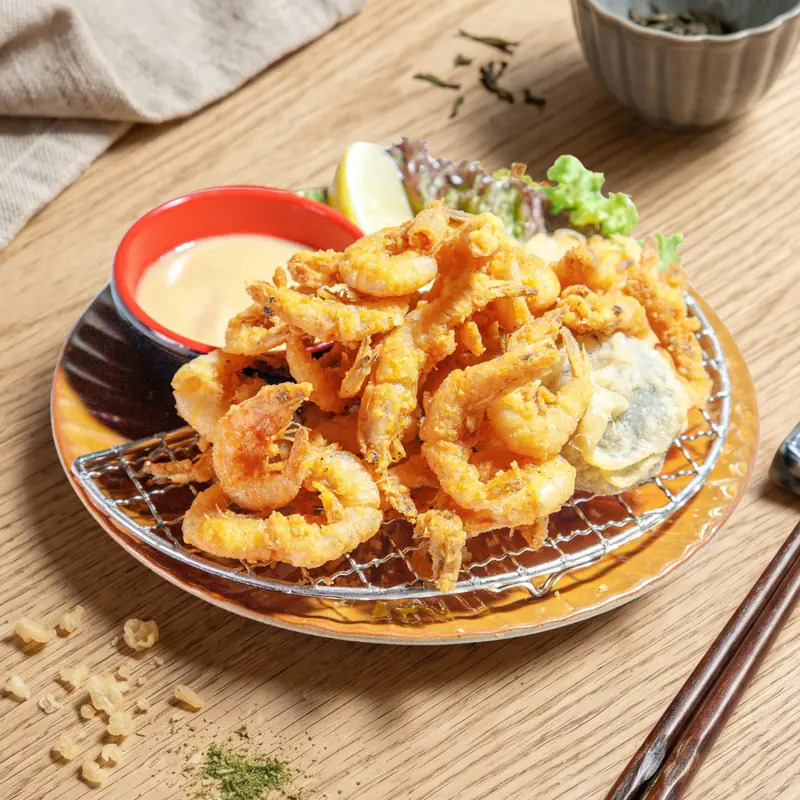
Karaage, tempura, agedashi tofu, gyoza, edamame, wakame salad. Order two of these for the table as soon as you sit down and the rest of the meal goes considerably more calmly, because nobody is making decisions while hungry.
Salada, dezato and nomimono
Salads, desserts and drinks. Wakame seaweed salad to balance a rich meal; mochi, purin and ice cream to finish; green tea, soft drinks and yuzu to drink. No alcohol — that is the whole drinks list.
Kids
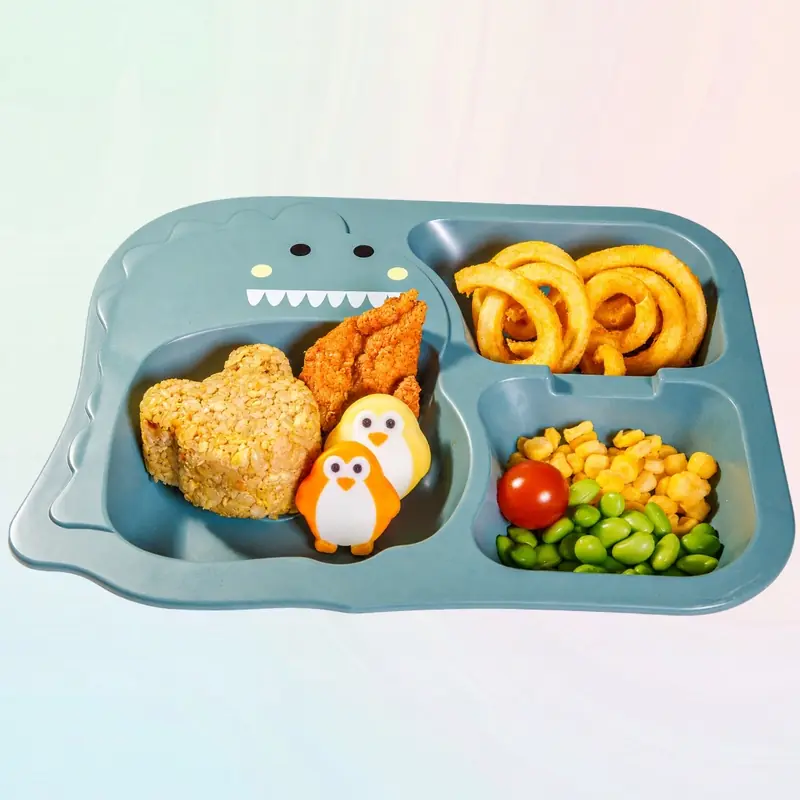
A short section for ages twelve and below, built around things children reliably eat — fried rice, chicken, udon — served on a character tray. There are high chairs at every restaurant and kids cutlery if you ask for it.
Party platters
Four tiered platters of 30 to 40 pieces, each suited to four to six people. These are not on the belt and they are not made on the spot: they are ordered at least three days ahead through our contact form and collected from the restaurant you choose.
Delivery can often be arranged — it depends on whether we can reach your address from that restaurant, so tell us where you are when you enquire and we will say yes or no straight away. We book a Lalamove or Grab rider, and the delivery charge is paid by you on top of the platters.
How much of it is actually on the belt?
Roughly the first section and nothing else. Everything below it is cooked to order and carried to your table, which is why a sushi menu at a kaiten restaurant looks so much longer than the belt in front of you suggests.
A good approach for a first visit: eat two or three plates off the belt while you read, then order one hot dish for the table. You get the format and the kitchen in the same hour.
Ordering for a group
Small plates make sharing awkward, because everybody is lifting at a different speed and nobody wants to be the person who took the last one. For a table of four or more, send two or three rolls and a couple of fried starters to the middle and let the belt handle the rest. Nobody has to negotiate anything.
What is not on it
No prices beside the dishes, deliberately. The plate colour already tells you what a belt plate costs, and the cooked dishes are priced in the restaurant. And no alcohol, as above.
Reading it without getting lost
If the Japanese words are the part slowing you down, we wrote a separate glossary that explains ika, ebiko, aburi, moriawase and the rest, using only dishes that are actually on the current menu.
Between that and this guide you should be able to read a sushi menu anywhere in Malaysia without having to point hopefully at a photograph — though there is nothing at all wrong with pointing at a photograph either.
If you are reading it on your phone before you come
Every category on our website has its own page, with a photograph and a description for each dish. It is a far easier way to decide than scrolling a PDF on a phone. The printed menu is there as a flipbook too, if you would rather see it laid out the way it is on the table.
Browse the full menu by category — every dish has a photo and a description, and the plate colour already tells you the price.